Thermal remediation systems circulate dry heat between 120°F and 135°F, maintaining this range for a minimum of 4 continuous hours to penetrate deep into structural lumber, mattress cores, and behind baseboards. This…
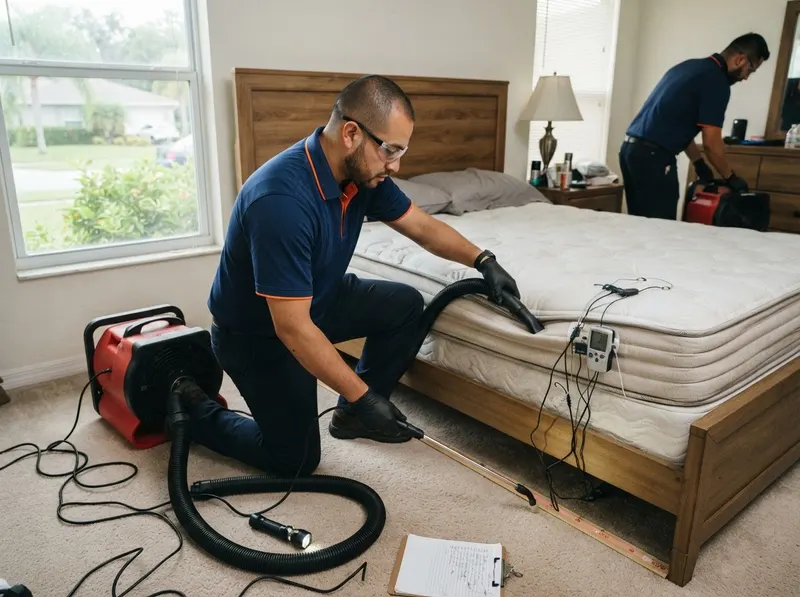
Thermal remediation systems circulate dry heat between 120°F and 135°F, maintaining this range for a minimum of 4 continuous hours to penetrate deep into structural lumber, mattress cores, and behind baseboards. This continuous thermal exposure denatures the proteins within bed bugs (Cimex lectularius) and dehydrates their eggs, which chemical sprays alone often fail to penetrate. In multi-unit properties and older wood-frame bungalows found in Historic Old Northeast, Kenwood, and Crescent Lake, thermal remediation reaches void spaces without requiring the disposal of expensive furniture. Chemical remediation utilizes EPA-approved insect growth regulators (IGRs) and non-repellent liquid formulations applied around room perimeters, switch plates, and bed frames to create an active protective barrier for emerging nymphs.
The operational trade-off between thermal and chemical methods centers on preparation labor versus treatment speed. Whole-home thermal treatments resolve infestations in an 8-hour window on a single day, eliminating the need for repeated tenant displacements, yet require the temporary removal of meltable items like candles, vinyl blinds, oil paintings, and aerosol containers. Standalone chemical treatments demand significantly less preparatory clearing and cost less upfront, but they require a multi-week application schedule to interrupt the 14-day egg hatch cycle. In humid coastal environments like Shore Acres, Snell Isle, and Coquina Key, indoor ambient humidity requires industrial air movers to ensure even heat distribution through dense sub-tropical air currents.
Properties near the Gulfport border, Disston Heights, and Euclid Heights benefit from combining both protocols: thermal heat delivers an immediate, single-day mortality rate across all life stages, while targeted chemical residuals guard against secondary infestations carried in from shared walls or travel luggage. Technicians verify target temperatures using calibrated infrared laser thermometers and remote thermal sensors placed inside the densest furniture cushions. Diagnostic assessments confirm the exact structural layout before equipment deployment, avoiding heat loss across concrete slab foundations or uninsulated attic spaces.
Every job gets a firm, written price after a free on-site visit.
Tell us about your bed bug heat and chemical remediation job in St. Petersburg and we'll send a clear, written quote, usually the same day.
 Suncoast Sparrow Pest Control