Pest Control Service in St. Petersburg protects residential properties against intense subtropical pest pressures driven by high ambient humidity, coastal water tables, and sandy pineland soils throughout Pinellas County.
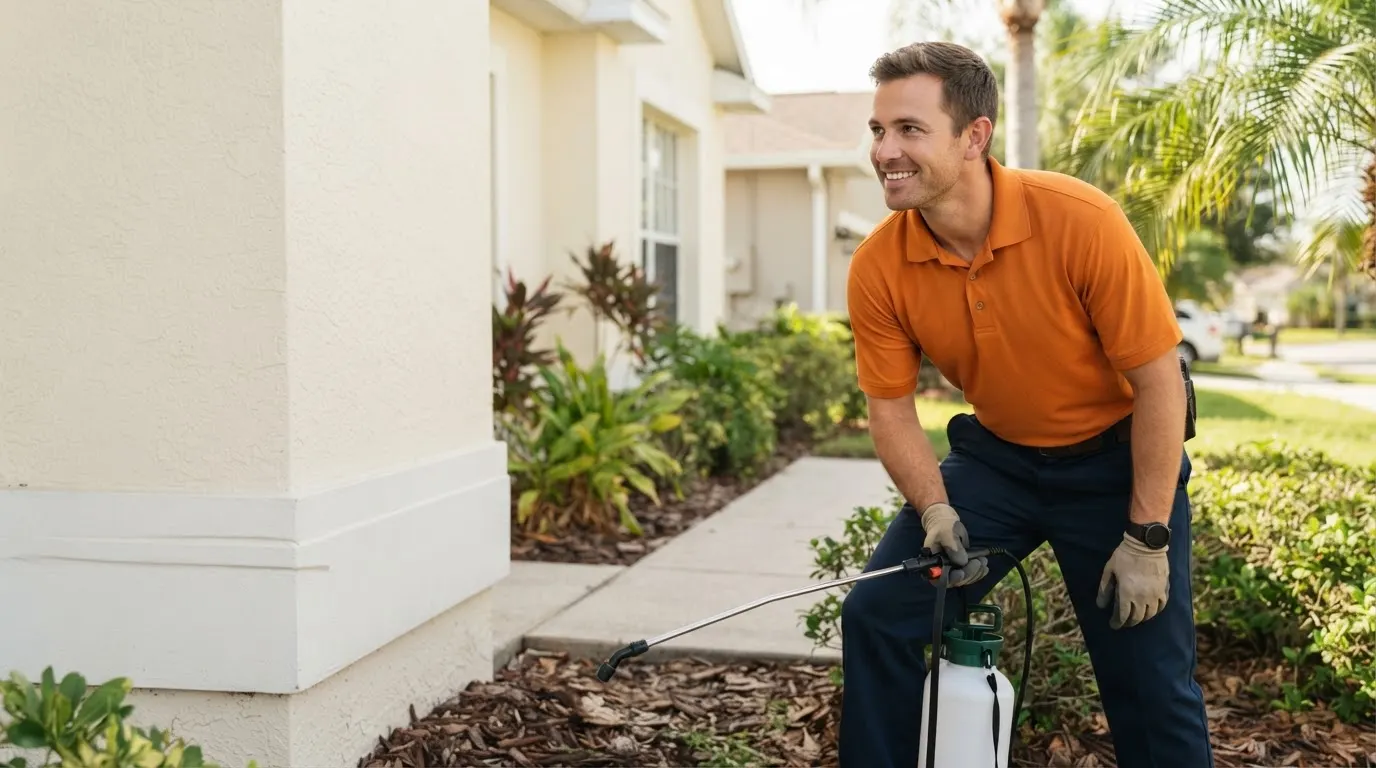
Pest Control Service in St. Petersburg is a targeted, perimeter-based extermination and structural exclusion process designed to eliminate coastal Florida wood-destroying organisms, public health insect vectors, and commensal rodents from residential structures.
Every service reflects the same meticulous attention to detail, whether it's a single job or a larger pest control service project across St. Petersburg.
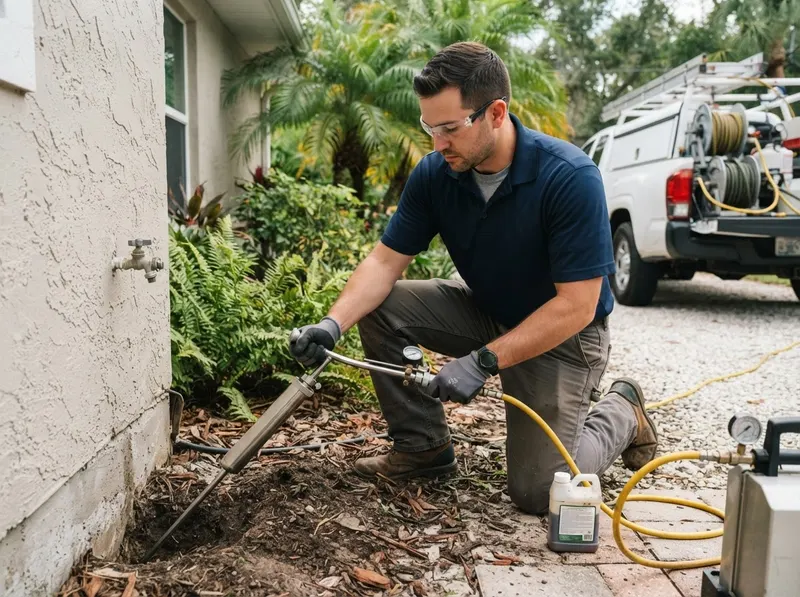
Subterranean termite treatment establishes continuous non-repellent chemical liquid barriers within sandy Pinellas soils to prevent Reticulitermes flavipes and invasive Formosan colonies from penetrating concrete slab expansions and stem walls. Technicians excavate continuous 6-inch by 6-inch trenches adjacent to exterior foundation walls, applying 4 gallons of termiticide emulsion per 10 linear feet to penetrate deep into sandy soil profiles. Hollow masonry block voids, slab cold joints, and interior plumbing penetrations receive precision horizontal rod injections at 12-inch centers. Raised crawlspaces receive trenching along interior pier supports and stem footings to arrest shelter tube construction, protecting heart-pine sills and floor joists without requiring structural tenting or resident relocation.
Get a quote →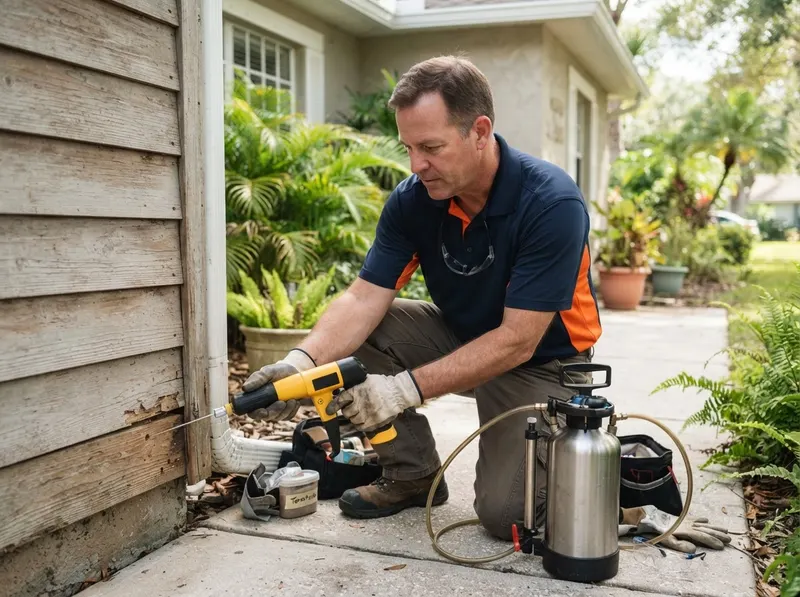
Drywood termite spot treatment isolates and eradicates Cryptotermes brevis colonies nesting entirely within structural lumber, window bucks, subflooring, and exposed attic trusses. Technicians locate active feeding galleries using acoustic detection probes, moisture meters, and visual inspections of frass accumulation beneath kickout holes. Small 1/8-inch access holes are drilled directly into infested timber galleries, followed by the mechanical injection of pressurized expanding foam carrying disodium octaborate tetrahydrate or fipronil. The expanding foam travels through the interconnected chamber network, coating gallery walls and killing feeding nymphs, soldiers, and reproductives upon contact, while remaining active within the wood grain to prevent re-infestation without gaseous evacuation.
Get a quote →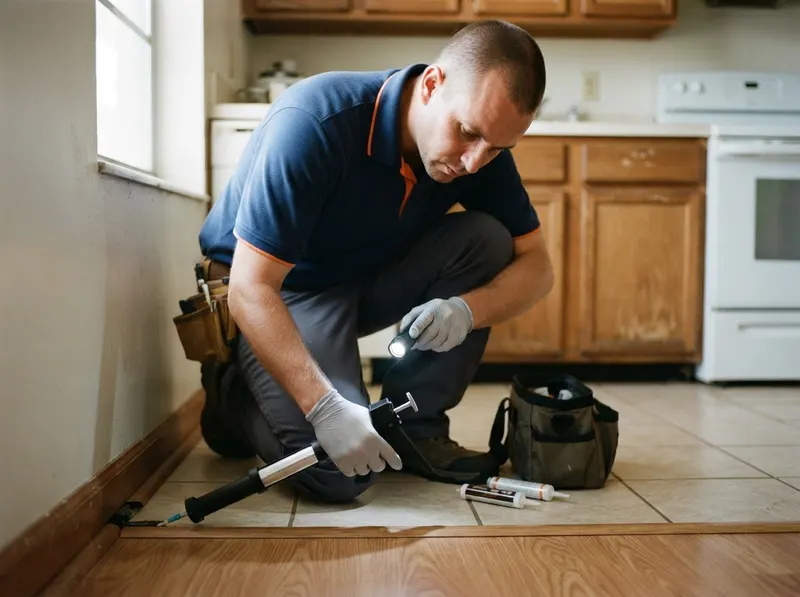
German cockroach remediation utilizes targeted chemical matrix baits combined with juvenile hormone mimics to dismantle Blattella germanica breeding populations inside high-moisture kitchen cabinetry and behind appliance heat sources. Technicians place microscopic gel beads directly into cabinet hinge pockets, under counter lip recesses, behind refrigerator compressor mounts, and along electrical chase ways where nymphs hide. Pyriproxyfen or hydroprene growth regulators prevent juvenile instars from completing their final molt into reproductive adults, ending reproduction cycles within two distinct generations. The protocol specifically avoids repellent aerosol sprays, which scatter roach populations into interior bedroom walls and adjacent apartment living areas.
Get a quote →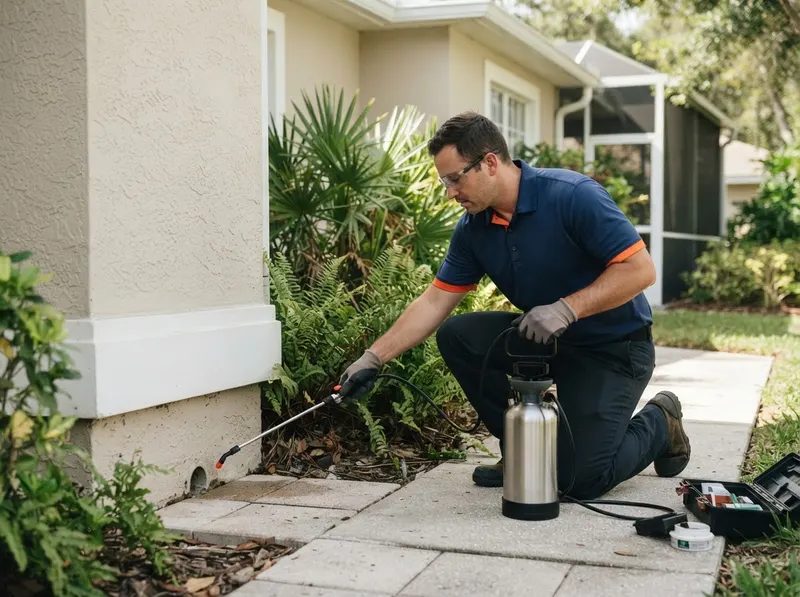
American cockroach perimeter defense targets peri-domestic sewer roaches and palmetto bugs emerging from saturated exterior mulch beds, municipal storm drains, tree holes, and water meter boxes. Technicians apply microencapsulated liquid barriers along foundation bases, garage door jambs, exterior threshold plates, and soffit overhang lines to stop inward nocturnal migration. Water-resistant granular perimeter baits containing dynamic active ingredients are distributed across surrounding landscape beds to eliminate harborage populations before insects encounter the foundation envelope. Weep screeds and wall weep holes receive precision dusting with amorphous silica gel to eliminate crawling insects attempting to enter structural brick cavities.
Get a quote →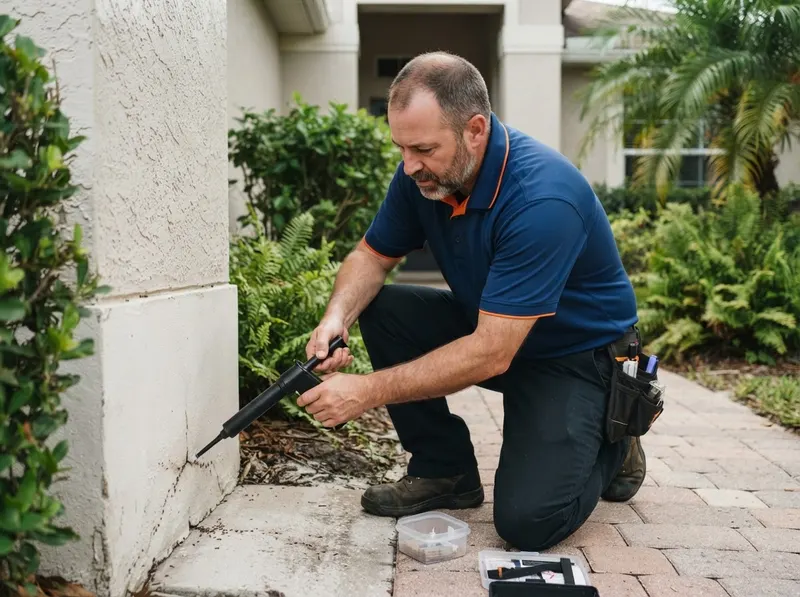
Ghost ant eradication eliminates foraging Tapinoma melanocephalum and rover ant colonies that establish diffuse, multi-queen satellite nests within wall voids, electrical outlets, and potted plants. Technicians deploy slow-acting liquid carbohydrate and protein baits along identified pheromone trails behind appliances and window sills. Foraging worker ants ingest the low-toxicity bait matrix and carry it back into structural wall cavities, feeding multiple functional queens through trophallaxis over a 7 to 14 day period. Over-the-counter pyrethroid contact sprays are strictly avoided, as contact toxins cause stress-induced colony budding, which fractures single infestations into multiple independent colonies.
Get a quote →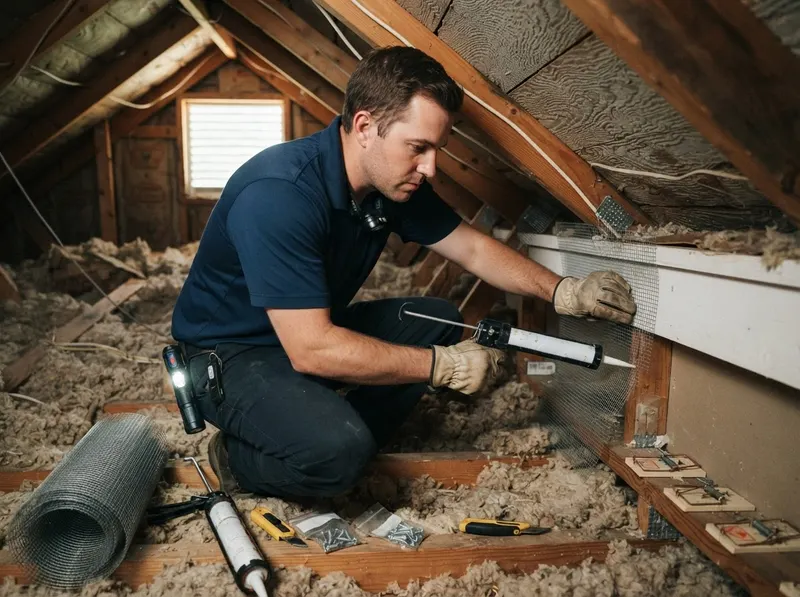
Roof rat attic exclusion combines durable structural exclusion carpentry with interior mechanical snap-trapping along aerial travel routes across attic joists. Technicians inspect rooflines to seal builder gaps, soffit returns, gable vents, and pipe chase penetrations using 1/4-inch 23-gauge hot-dipped galvanized hardware cloth, metal flashing, and steel-reinforced expanding foam. Heavy-duty mechanical snap traps set in tamper-evident safety tunnels are mapped along structural top plates, plumbing stacks, and insulation runways to rapidly capture active interior rodents. Interior trapping runs for 10 to 14 days with periodic carcass removal, ensuring no toxic anticoagulant rodenticides are placed inside attics to prevent dead animal odors within wall voids.
Get a quote →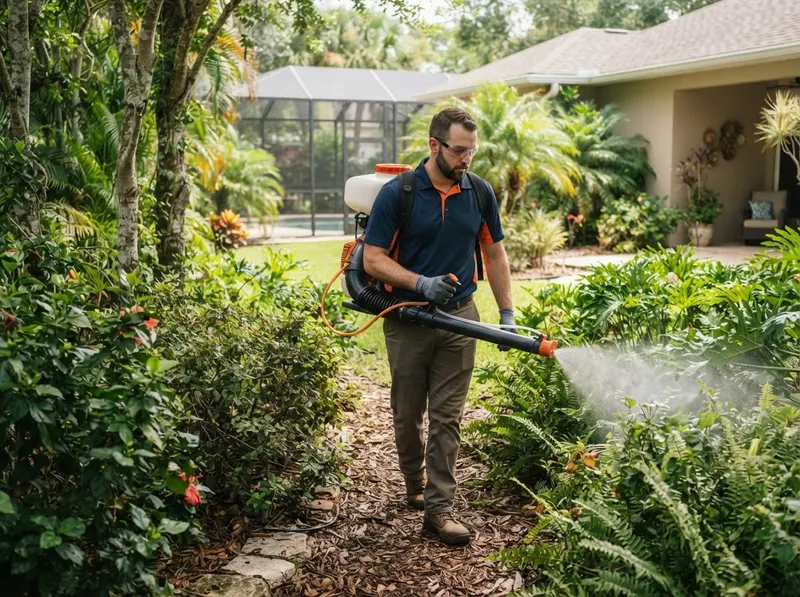
Mosquito reduction treats shaded coastal foliage, underside palm canopies, and under-deck moisture zones using ultra-low-volume misting equipment. Technicians apply microencapsulated adulticides and botanically derived compounds to the undersides of broadleaf plants where Aedes aegypti and Culex quinquefasciatus harbor during peak daylight hours. Shaded standing water sources, French drains, and bromeliad axils receive biological larvicide treatments containing Bacillus thuringiensis israelensis (Bti) spores, killing aquatic wrigglers within 24 hours without harming birds, pets, or beneficial pollinators. Monthly treatments from April through October maintain continuous barrier disruption during Pinellas County's wet summer season.
Get a quote →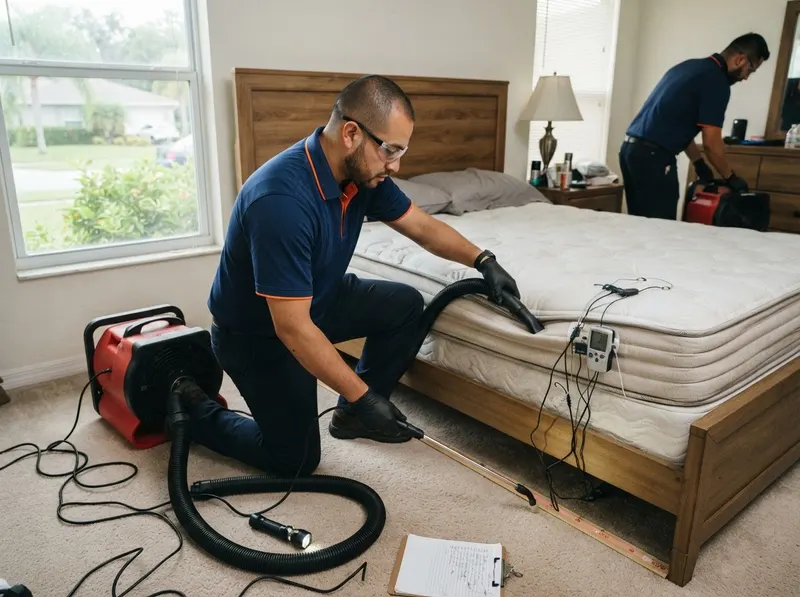
Bed bug remediation eliminates Cimex lectularius populations from mattress tufts, bed frame hardware, baseboard channels, and electrical junction boxes. Technicians dismantle furniture assemblies to treat crack-and-crevice voids with dual-action contact insecticides combined with desiccating amorphous silica dusts, which cut through insect cuticles to cause rapid dehydration. High-temperature structural steam equipment delivering 220-degree vapor treats mattress seams, upholstered chairs, and carpet tack strips, killing heat-sensitive bug eggs on contact. Treated spaces require zero whole-home chemical fogging, keeping resident possessions protected and avoiding chemical resistance commonly associated with standard retail pyrethroid bug bombs.
Get a quote →You get a firm, itemized quote for your pest control service before any work begins, no surprises, no pressure.
Careful prep, tidy work, and a full cleanup when we are done. We treat your home and belongings like our own.
The same trusted, background-checked team from the first call to the final check.
Selecting appropriate structural pest protocols depends directly on pest biology, structural building materials, and ambient moisture access. For wood-destroying subterranean termites colonizing monolithic slab foundations or historic heart-pine pier-and-beam crawlspaces, choose continuous non-repellent liquid soil barriers trench-applied at 4 gallons per 10 linear feet down to the footing; the trade-off is higher upfront mechanical labor compared to surface sprays, but the non-repellent active ingredient neutralizes subterranean queens within 60 to 90 days via social grooming transfer. For active drywood termite infestations isolated within exposed roof trusses, window buck jambs, or tongue-and-groove ceiling decking, choose localized structural borate and expanding foam void injections; the trade-off requires meticulous acoustic or thermal gallery mapping rather than whole-structure gaseous sulfuryl fluoride tent fumigation.
For acute interior German cockroach infestations in residential kitchens, select targeted crack-and-crevice bait gels paired with pyridine-based insect growth regulators rather than synthetic pyrethroid aerosol sprays; the trade-off demands strict resident sanitation to strip competing grease films so foraging nymphs ingest the bait matrix. If exterior invasions involve peri-domestic American cockroaches or ghost ants trailing across mulch beds, choose quarterly microencapsulated exterior perimeter band applications extending 3 feet up the wall and 5 feet outward; the trade-off requires renewal every 90 days as coastal ultraviolet radiation and tropical downpours naturally degrade active residues. For roof rats navigating oak canopies into attic crawlspaces, prioritize heavy-gauge 1/4-inch hardware cloth exclusion sealing paired with mechanical trapping; the trade-off demands structural carpentry repairs rather than exterior anticoagulant bait boxes that risk secondary toxicity to local predatory raptors.
Every project gets a firm, written price after a free on-site visit. Ranges below for orientation.
Tell us about your pest control service job and we'll send a clear, written quote, usually the same day. Or just call and talk to a real St. Petersburg pro.
(727) 662-3833
St. Petersburg homes contend with an elevated water table and persistent coastal humidity that amplify wood decay and insect pressure, particularly along low-lying neighborhoods near Shore Acres, Coquina Key, and Snell Isle where high-tide flood events regularly saturate building perimeters. The transition between sandy scrub soils and dense tropical vegetation around Boyd Hill Nature Preserve, Weedon Island Preserve, and Sunken Gardens creates continuous natural reservoirs for subterranean termites, roof rats, and invasive ants. Historic properties throughout Kenwood and Historic Old Northeast feature 1920s heart-pine framing, tongue-and-groove decking, and raised pier-and-beam foundations that demand localized borate treatments and crawlspace moisture management rather than generic perimeter barrier applications. Mid-century ranch homes across Disston Heights, Euclid Heights, and Crescent Lake frequently face roof rat bridgeheads via mature live oak and cabbage palm canopies contacting roof overhangs, alongside subterranean termite pressures traveling through foundation expansion joints. Managing these localized vectors across Pinellas County requires adjusting active chemical compounds based on local soil porosity and seasonal rainfall along Tampa Bay and the Gulf of Mexico.
Free estimates for St. Petersburg & the surrounding area.
 Suncoast Sparrow Pest Control